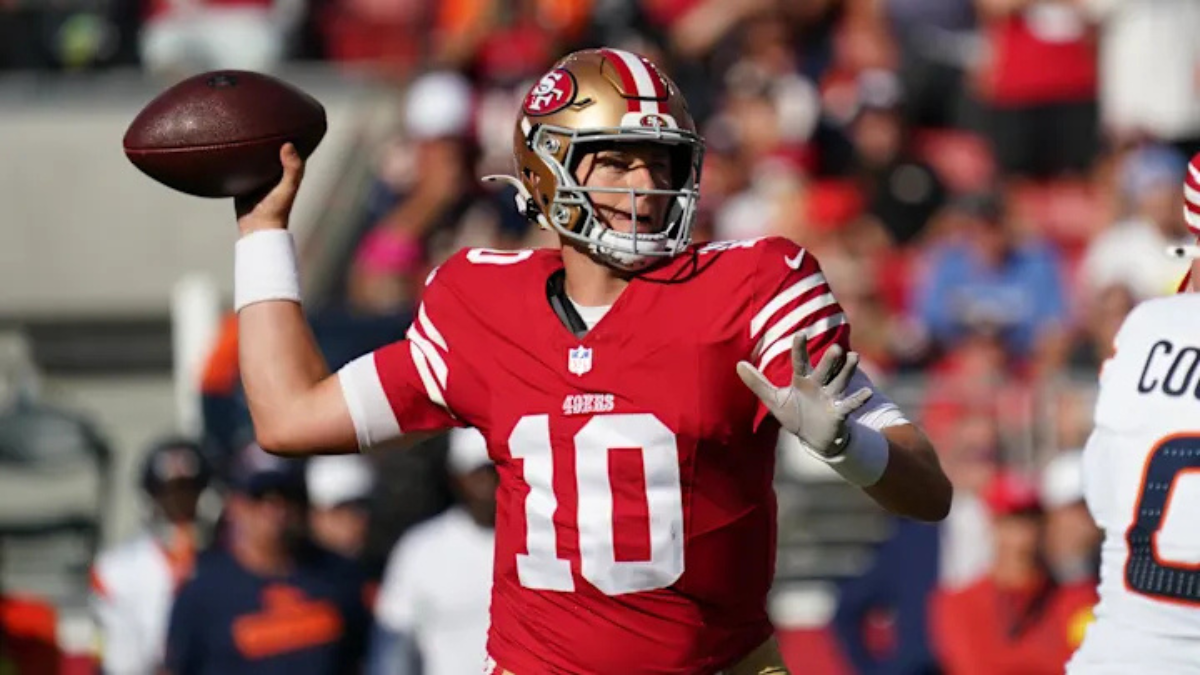
Why the San Francisco : In a surprising move during a recent NFL game, the San Francisco 49ers benched quarterback Mac Jones in response to Brock Purdy’s injury. This decision has sparked much discussion among fans and analysts, raising questions about the team’s quarterback strategy and the repercussions on their season. This blog sheds light on the reasons behind the benching, the impact of Purdy’s injury, and what this means for the 49ers moving forward.
The Context: Brock Purdy’s Injury
Brock Purdy, who had been the starting quarterback for the 49ers, suffered an injury that left the team scrambling for options. Purdy’s presence had been pivotal in leading the team’s offense with his poise, accuracy, and leadership. His injury created an immediate void and placed the coaching staff in a difficult position to maintain offensive stability.

The injury occurred unexpectedly during the game’s second quarter, forcing the 49ers to re-evaluate their quarterback lineup in real-time. The uncertainty surrounding Purdy’s availability was also a factor in the decision-making process.
Why Mac Jones Was Benched
Often considered a competent quarterback with starting experience for the New England Patriots, Mac Jones was activated to fill in for Purdy. However, the 49ers coaching staff made the strategic decision to bench Jones after assessing his performance and fit within the team’s offensive schemes.
Several reasons influenced this move:
- Performance Concerns: Jones struggled to effectively move the offense against the opposing defense, leading to stalled drives and missed opportunities.
- Scheme Fit: The 49ers’ offense under head coach Kyle Shanahan relies heavily on intricate play designs and mobility, which may not fully align with Jones’ skill set.
- Long-term Strategy: With Purdy’s injury status uncertain, the coaching staff prioritized evaluating other quarterback options better suited to their offensive philosophy.
Who Took Over?
Following Jones’ benching, the 49ers turned to their backup quarterbacks or alternative strategies to keep the offense functioning. The coaching staff emphasized adaptability, relying on their depth chart and creative play-calling to mitigate the quarterback situation’s impact.
The shift also highlighted the 49ers’ confidence in their coaching system and the next-generation players waiting for their moment to step up.
Impact on 49ers’ Season
- Purdy’s injury and the subsequent benching of Mac Jones in favor of other options
- pose challenges for the 49ers as they contend for a playoff spot. The quarterback
- instability puts pressure on the entire offense, demanding more from the running
- game and defense to compensate for any offensive hesitation.
Kyle Shanahan’s coaching acumen will be tested as he adjusts game plans to optimize the personnel available. The 49ers have historically been resilient, but the quarterback situation stresses the importance of depth and preparation at this critical stage of the NFL season.
Fan and Analyst Reactions
Fans responded to the benching with mixed emotions—some expressing frustration with Jones’ performance, while others showed understanding of the complex challenges the team faces. Analysts further debated Shanahan’s decision, weighing potential alternatives and forecasting how the quarterback rotation might evolve depending on Purdy’s recovery.
The situation has sparked broader discussions about the importance of quarterback versatility and the strategic depth required for sustained team success.
Looking Ahead: Recovery and Planning
The 49ers are closely monitoring Brock Purdy’s recovery process and have made player health a top priority. The timing and nature of his return remain uncertain, but the team’s approach emphasizes long-term viability over short-term fixes.
Meanwhile, the coaching staff is focused on refining offensive strategies and preparing backups to perform effectively if called upon. This experience might prove beneficial, building confidence and readiness across the roster.
The benching of Mac Jones by the San Francisco 49ers illustrates the complexities NFL teams face when dealing with injuries to key players like Brock Purdy. While difficult, such decisions highlight the dynamic nature of football strategy and the importance of depth and adaptability.