Preah Vihear temple dispute : In a shocking turn of events that has reignited one of Southeast Asia’s most volatile flashpoints, Thailand launched airstrikes along the disputed border with Cambodia on December 8, 2025. This military action comes amid fresh clashes that have claimed lives and displaced thousands, threatening the fragile peace brokered just months ago. As Thailand-Cambodia border tensions flare up once more, the world watches nervously. What sparked this Thailand airstrikes Cambodia incident? How deep do the roots of this conflict run? And what does it mean for regional stability? In this in-depth analysis, we’ll unpack the latest developments, historical backdrop, and potential fallout from these Cambodia-Thailand border clashes.
If you’re searching for insights on disputed border Thailand Cambodia or the implications of ASEAN border disputes, you’ve come to the right place. Let’s dive in.
Preah Vihear temple dispute The Spark What Led to the Thailand Airstrikes?

The immediate trigger for the Thailand airstrikes was a deadly skirmish along the contested border region. According to reports, at least one Thai soldier was killed, and four others sustained injuries during the exchange of fire. The Thai military swiftly pointed fingers at Cambodia, accusing Phnom Penh of deploying heavy weaponry and shifting combat units provocatively close to the frontier.
On the flip side, Cambodia’s Ministry of National Defence fired back, claiming Thailand initiated the aggression without provocation. “We have exercised restraint and have not retaliated despite these incursions,” a ministry spokesperson stated. The strikes targeted Cambodian positions in the Oddar Meanchey province, resulting in three civilian injuries—described as “serious” by deputy governor Met Measpheakdey. No further casualties have been confirmed, but the human cost is already mounting.
This isn’t an isolated flare-up. Just six weeks prior, a U.S.-brokered ceasefire had temporarily halted hostilities following a brutal five-day war in July 2025. That conflict alone claimed at least 48 lives and forced 300,000 people from their homes. Yet, simmering distrust persisted, with both sides trading accusations of ceasefire violations. Thailand suspended the agreement in November after a series of landmine incidents—one that cost a Thai soldier his foot, and another that killed a Cambodian civilian while injuring three others.
Thailand Prime Minister Anutin Charnvirakul addressed the nation, emphasizing a measured response: “Thailand will not tolerate violations of its sovereignty but will act rationally, with due regard for peace, security, and humanity.” His words underscore Bangkok’s balancing act—defending territory without plunging into all-out war.
A Century-Old Wound: The Historical Context of Thailand-Cambodia Border Tensions
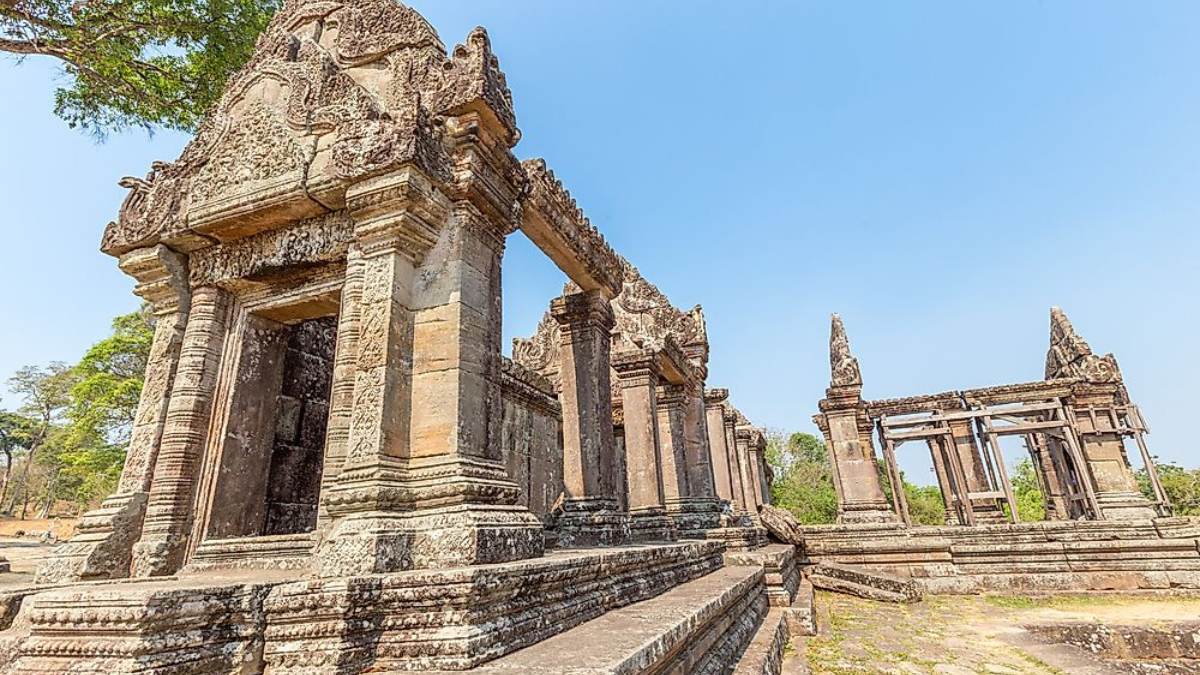
To understand today’s Thailand Cambodia border dispute, we must rewind over a century. The roots trace back to the French colonial era, when Cambodia was under protectorate rule until 1953. French cartographers drew arbitrary lines across the dense jungles and ancient temple sites, ignoring local realities and ethnic overlaps. The 817-kilometer (508-mile) border became a patchwork of ambiguities, with flashpoints like the Preah Vihear temple—a UNESCO World Heritage site awarded to Cambodia in 1962 but still contested by Thai nationalists.
Tensions boiled over sporadically: In 2008, artillery duels around Preah Vihear killed dozens. The 2011 clashes displaced thousands. Fast-forward to 2025, and the cycle repeated. It began in May with brief firefights that felled a Cambodian soldier, escalating into tit-for-tat maneuvers. By July, full-scale war erupted, drawing global alarm.
Enter the unlikely peacemaker: Former U.S. President Donald Trump, who leveraged trade threats to force a ceasefire. Trump, overseeing the signing, quipped that he’d “stopped a war” through tariffs and believed “they’re gonna be fine.” Malaysia and China also mediated, highlighting ASEAN’s role in these Southeast Asia border conflicts.
Cambodia’s elder statesman, former Prime Minister Hun Sen—now a powerful advisor to his son, current leader Hun Manet—issued a stern warning: “Thailand is trying to pull us into retaliation. The red line for responding has been set—commanders must educate troops accordingly.” His plea for restraint echoes the exhaustion felt by border communities caught in the crossfire.
Human Toll and Evacuations: The Faces Behind the Headlines
Beyond the geopolitics, the Thailand airstrikes Cambodia have unleashed chaos on civilians. In Thailand, over 385,000 people across four border provinces received evacuation orders. By Monday morning, 35,000 had registered at shelters, with thousands more bunkering down with relatives. Families in Surin and Si Sa Ket provinces—rice-farming heartlands—fled with little more than essentials, fearing stray artillery or advancing troops.
Cambodia fared no better. The Ministry of Information reported 1,157 families displaced from frontline villages. In Oddar Meanchey, schools shut down, markets emptied, and aid workers scrambled to distribute food and medical supplies. “We’ve seen this before,” said one evacuee, a 52-year-old farmer. “But with airstrikes now? It’s terrifying.”
These border clashes Thailand Cambodia aren’t just statistics—they’re stories of disrupted lives, economic ruin, and generational trauma. Agriculture, a lifeline for these regions, grinds to a halt as fields lie fallow under threat.
International Reactions: Calls for Calm Amid Rising Stakes
The global community has mobilized swiftly. As ASEAN chair, Malaysian Prime Minister Anwar Ibrahim urged “maximum restraint,” warning that escalation could unravel years of stabilized relations. “Open channels and existing mechanisms must be used,” he implored, referencing the bloc’s mediation frameworks.
Trump, ever the wildcard, downplayed November’s landmine scares but reiterated his “deal-making” prowess. China, with economic stakes in both nations via Belt and Road projects, has quietly pushed for dialogue. The UN and EU echoed calls for de-escalation, tying it to broader concerns over ASEAN security and refugee flows.
Analysts warn of domino effects: Spillover into Laos or Vietnam? Strains on Thailand’s tourism-dependent economy? Or worse, a proxy battleground for great-power rivalries?
What Lies Ahead? Pathways to Peace in the Thailand-Cambodia Dispute
As Thailand-Cambodia tensions 2025 hang in the balance, the path forward is murky. Renewed talks under ASEAN auspices seem likely, perhaps with Trump’s tariff shadow looming. Demilitarization of the border, joint patrols, and International Court of Justice rulings on disputed zones could build trust. Yet, domestic politics—nationalist fervor in Bangkok, legacy pressures in Phnom Penh—complicate matters.
For now, the disputed border Cambodia Thailand remains a tinderbox. Both nations must prioritize diplomacy over drones. History shows escalation benefits no one; only dialogue can redraw lines not in ink, but in goodwill.