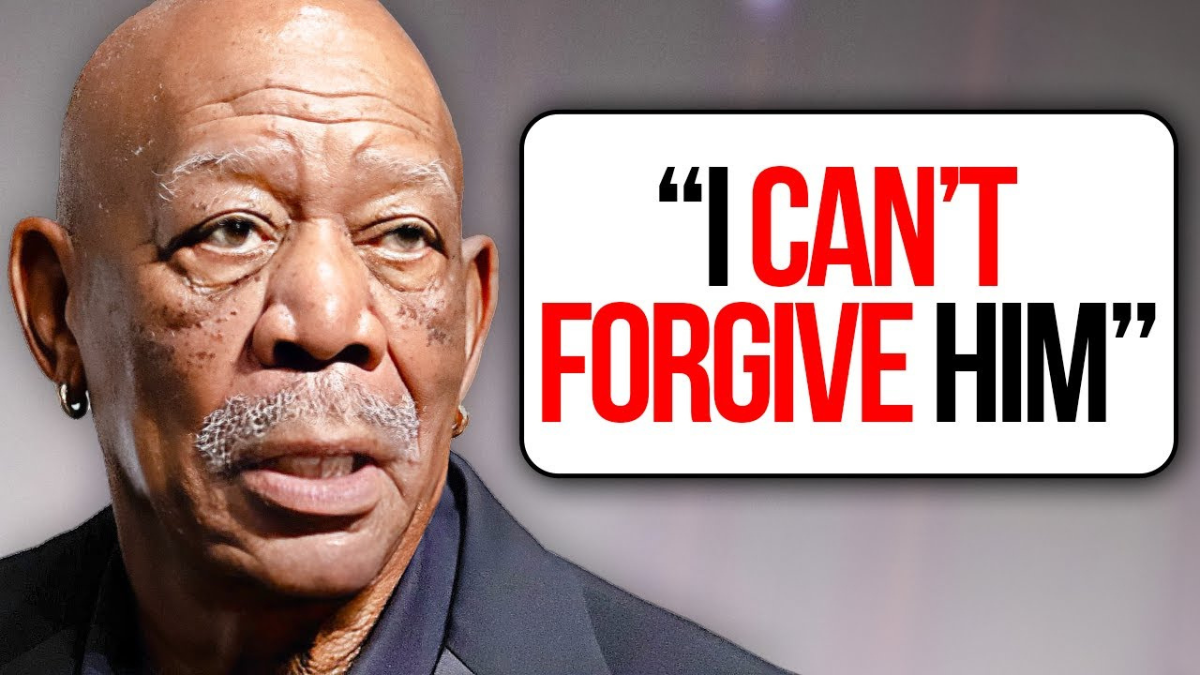
Famous Hollywood actors inspiration : Morgan Freeman, a legendary name in Hollywood, has inspired millions of aspiring actors through his performances, voice, and journey. Recently, Freeman opened up about the individual who ignited his passion for acting and became his lifelong inspiration—Sidney Poitier. This revelation offers not just a glimpse into Freeman’s personal motivations, but also highlights the broader legacy of African American artists in the film industry
The Early Years: Discovering a Passion for Acting

Born on June 1, 1937, in Memphis, Tennessee, Morgan Freeman’s early life was marked by frequent moves, struggles, and humble beginnings. Yet, his love for performance emerged young. He played lead roles in school plays at age nine and won statewide drama competitions by twelve. Though Freeman initially dreamed of becoming a fighter pilot and even joined the U.S. Air Force, the call of the stage was too powerful to ignore. After his military service, he studied drama in Los Angeles and began his journey toward stardom
Sidney Poitier: The Inspiration Behind the Actor
When asked in a recent interview who inspired him to become an actor, Freeman answered without hesitation: “Sidney Poitier.” The impact of Poitier’s career—marked by trailblazing roles and historic accolades—provided a model of integrity, resilience, and excellence. Sidney Poitier was not just an acclaimed performer but became the first Black actor to win the Academy Award for Best Actor for his role in “Lilies of the Field” in 1963. For Freeman, witnessing such groundbreaking achievements showed what was possible and set the standard for his own career aspirations.
Breaking Through Barriers: Freeman’s Own Journey
Morgan Freeman’s road to success was not direct or easy. He started with small theater gigs, Broadway performances, and even children’s television on shows like “The Electric Company.” Throughout the 1970s and 1980s, Freeman steadily built a reputation for his nuanced performances and deep, compelling voice. But his big break came later in life; his mature age becoming an asset, not a hindrance, as he took on powerful roles in films like “Street Smart,” “Driving Miss Daisy,” and “Glory.
Freeman’s story echoes that of Poitier—both had to break through industry barriers and redefine leading roles for Black actors in Hollywood. Freeman’s respect for Poitier is rooted not only in admiration but in shared experience.
The Legacy: From Inspiration to Mentorship
- Freeman has often spoken about the importance of representation on screen.
- Poitier’s influence, he says, extended beyond the art of acting to the dignity
- with which he navigated the industry. “He was my mentor long before he knew it,”
- Freeman admits, referencing iconic films like “The Defiant Ones” and “Lilies
- of the Field,” which shaped his artistic and moral standards
With a career spanning decades, Freeman himself has become an inspiration and mentor to a new generation of actors, just as Poitier was for him. In interviews, Freeman frequently encourages upcoming talent to find their own voices, pursue opportunities tirelessly, and remember that persistence is key—no matter the obstacles faced along the way
Freeman’s Timeless Impact on Hollywood
- Some of Freeman’s most celebrated performances can be traced to the influence
- of Poitier: compelling characters, powerful dialogue, and an unwavering moral core.
- Films like “The Shawshank Redemption,” “Million Dollar Baby,” and “Invictus”
- stand as testaments to his enduring talent and the lessons inherited from his role model
Importantly, Freeman’s voice—both literal and figurative—has narrated stories of hope, justice, and resilience, inspiring viewers around the world. His homage to Poitier comes full circle as he continues opening doors for actors of diverse backgrounds, ensuring that the legacy of representation continues in Hollywood.
By naming Sidney Poitier as his inspiration, Morgan Freeman pays tribute to the man who changed the face of film for generations to come. Freeman’s own journey exemplifies how the inspiration of one legend can spark greatness in another, and how passing that torch can forever transform the landscape of storytelling.